
What Is the TCG Binder Michi Method? The Viral Display Trend Explained

If you've spent any time browsing Reddit, Instagram, or TCG YouTube lately, you've probably seen binder pages that look more like miniature art galleries than traditional collections. That's the Michi Method, a creative binder organization style that's quickly becoming one of the most popular ways to showcase a trading card collection.
what-is-the-tcg-binder-michi-method-the-viral-display-trend-explained
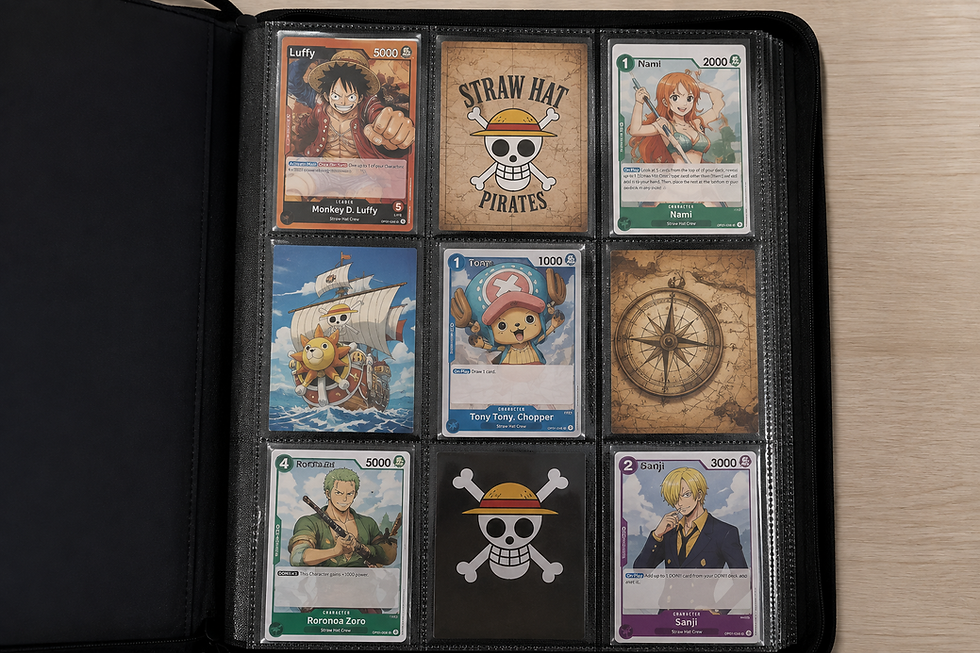
Although the trend first exploded in the Pokémon community, collectors are now using it for One Piece Card Game, Magic: The Gathering, Disney Lorcana, Yu-Gi-Oh!, Dragon Ball Super, and even sports cards. The idea is simple, but the results can completely change how your collection looks.
So, What Is the Michi Method?
The Michi Method, popularized by collector and creator Peeplop (Michi), is a binder organization style that treats each page as a curated display rather than simply a place to store trading cards.
Instead of filling every pocket with a trading card, collectors combine cards with custom artwork, themed inserts, and intentional negative space to create pages that tell a visual story. A layout might celebrate a favorite character, an evolution line, a faction, or even an entire set.
The approach is widely credited to collector and creator Peeplop (Michi), whose creative binder layouts inspired thousands of collectors to rethink what a binder could look like. Today, there are dedicated communities sharing layouts, templates, and printing tips built around the method.
Why Has the Michi Method Become So Popular?
If you’ve ever flipped through a completed master set, you know they’re impressive. But after twenty or thirty pages, every layout starts to look identical. The Michi Method changes that.
Instead of every page following the same nine-card grid, each spread becomes unique. A stunning alternate art or secret rare might become the centerpiece, while custom artwork fills the surrounding pockets. Another page might celebrate your favorite Pokémon, Straw Hat Pirate, or Magic planeswalker with matching colors and themed graphics.
It also solves one problem almost every collector runs into.
We’ve all had binder pages sitting half-finished while we hunt down expensive cards. Instead of leaving empty pockets, many collectors fill those spaces with custom artwork until the collection is complete. The page still looks intentional, and you can always replace the insert with the real card later.
Is It Only for Pokémon?
Not even No way! While Pokémon collectors helped make the Michi Method famous, the concept works with almost any trading card game because it's really about presentation rather than the cards themselves.
If you collect cards because you appreciate the artwork as much as the gameplay or investment potential, the Michi Method fits naturally.
Is It Better Than a Traditional Binder?
If your goal is to organize a complete master set in strict numerical order, a traditional binder is still the better option.
The Michi Method is really about showcasing your favorite cards. Instead of asking visitors to admire hundreds of cards in a grid, it guides their attention toward the cards and themes that matter most to you.
That’s why so many collectors use both approaches. They keep one binder for complete sets and another for creative displays.
Should You Try the Michi Method?
If you enjoy opening your binder and showing it to friends down at your LGS, absolutely.
The Michi Method doesn't require expensive chase cards or a massive budget. It simply encourages you to think differently about presentation. Whether you collect Pokémon, One Piece, Magic, or another TCG, it offers a creative way to turn an ordinary binder into something people genuinely remember.
The Michi Method has become popular because it reminds us that collecting is about more than simply owning great cards. It's also about how you display them, the stories you tell, and the personality you bring to your collection.
Have you tried building a Michi Method page yet, or are you sticking to traditional master set binders? Drop a comment or show off your setup at the LGS table!


Comments